


"Is he cheating?" is one of the most painful questions anyone brings to tarot. It usually arrives after weeks of small signals: a phone turned face down, plans that keep changing, a partner who feels further away. An "is he cheating" tarot reading can help you sort through those feelings, but it cannot settle the question for you. This guide covers what the cards can and cannot do here, how to ask, which cards tend to come up, and what to do next. Everything here applies whatever your partner's gender.
Tarot is not evidence
No card can prove that someone is unfaithful, and no card can prove that they are not. A reading reflects the state of the relationship and your own sense of it: trust, distance, what is being said and what is not. That is useful, but it is not information about what someone did last Tuesday.
So please do not treat a reading as grounds to accuse anyone, and do not use it as permission to go through their phone, read their messages or track where they go. Snooping rarely brings peace. Either you find nothing and still feel uneasy, or you find something in a way that makes an honest conversation much harder. What you can trust is what you actually observe over time, and what your partner says when you ask them directly.
Better questions than "is he cheating?"
"Is he cheating?" or "is there someone else?" asks the cards to be a detective, reporting on someone else's private behaviour. These questions give the reading something you can work with:
- "What is creating distance between us right now?"
- "What am I sensing in this relationship that I have not said out loud?"
- "How can I bring up my worries honestly and calmly?"
- "Is my fear about him, about this relationship, or about past hurt?"
- "What do I need to feel safe and respected?"
If you still want a direct answer, the yes or no spread is built for one clear question. "Is he being faithful to me?" is a fair way to phrase it. Read the answer as a reflection of the trust between you, not as a verdict.
Spreads to use
- Three-card spread: read the cards as "what I am feeling", "what is really going on between us" and "what would help". The middle card often shows whether the issue is secrecy, distance or stress from somewhere else.
- Love spread: you, your partner and the relationship. Useful for seeing whether you are both pulling away, or only one of you.
- Celtic Cross: for a situation with history, such as past infidelity, a long-distance relationship or a pattern of jealousy you want to understand.
Tarot cards for cheating, secrecy and hidden tension
- Seven of Swords: the card most often linked to cheating in tarot. It points to secrecy, half-truths or someone trying to get away with something. The secret is not always an affair; it can be money, a habit or an avoided conversation.
- The Moon: confusion, things not being what they seem, and also your own fear filling in the gaps. The Moon asks you to wait for clearer light before deciding anything.
- The Devil: temptation, compulsion or an unhealthy attachment. It can describe a third party, but also a relationship that has started to feel like a trap.
- Three of Swords: heartbreak and a painful truth. It shows the hurt, not who caused it or how.
If these cards appear, the useful takeaway is not "he is guilty". It is that something is not being said, and it is time to talk.
Cards that suggest faithfulness or a different problem
- Two of Cups: mutual feeling and real partnership. The bond between you is still active.
- The Lovers: commitment and choice. The question may be whether you both keep choosing each other, not whether someone else is involved.
- Four of Cups: withdrawal, boredom or being stuck in his own head. Distance is real, but it may have nothing to do with another person.
- Two of Swords: an avoided decision or a conversation neither of you wants to start.
Cards about you and your fears
Some cards turn the reading back to you, and that is not a dodge. Anxiety after being hurt before can make every late reply feel like proof.
- Nine of Swords: worry that is worse at night and bigger than the facts so far.
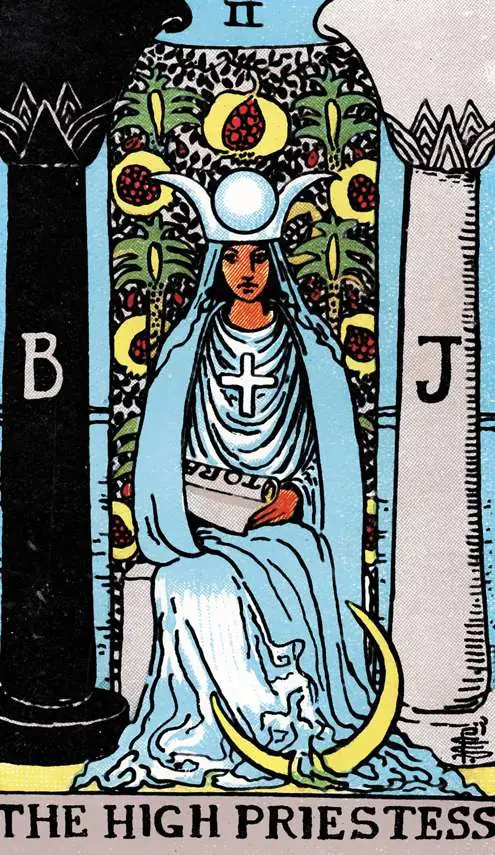
- The High Priestess: trust your intuition, but give it time to separate from fear before acting.
- Justice: look for facts and fairness. Ask directly, listen to the answer and judge by actions over time.
What to do with the reading
- Talk to him. Describe what you have noticed and how it feels, without accusing: "I've felt distance between us lately and it worries me." An honest partner can work with that.
- Trust patterns, not single moments. One strange evening means little. A steady pattern of lies, secrecy or contempt means a lot, whatever the cards say.
- Don't keep redrawing. Asking "is he cheating?" every night until a calmer card appears feeds the anxiety. Leave a week between readings, and write down what you drew.
- Look after yourself first. "What do I need right now?" is a fair question, whatever the answer about him turns out to be.
If you feel unsafe
If jealousy in your relationship involves control, threats, checking up on you or any kind of violence, that is not a question for tarot. Reach out to someone you trust or a local domestic abuse helpline, and if you are in immediate danger, contact emergency services. You deserve to feel safe, whatever is or is not happening.
Ask your own question
You can try a free yes or no reading right below this article with the question "Is he being faithful to me?" or one of the gentler versions above. Each card is explained in its position and linked back to your question. Every card meaning is also published on this site, so you can check any interpretation for yourself.